Photo: Denis Charlet/Getty Images
As the sun sets on another tumultuous day, France finds itself engulfed in a wave of unrest and protest that shows no signs of abating. Riots have erupted across the country following the fatal police shooting of 17-year-old Nahel M., leaving cities scarred by violence, arrests, and a sense of deep-seated frustration.
Nanterre, a northwestern suburb of Paris, became the epicenter of the storm after Nahel was tragically killed during a routine traffic check. The incident, which occurred on Tuesday morning, sparked a powder keg of emotions, fueling a collective outcry against police violence and systemic inequalities.
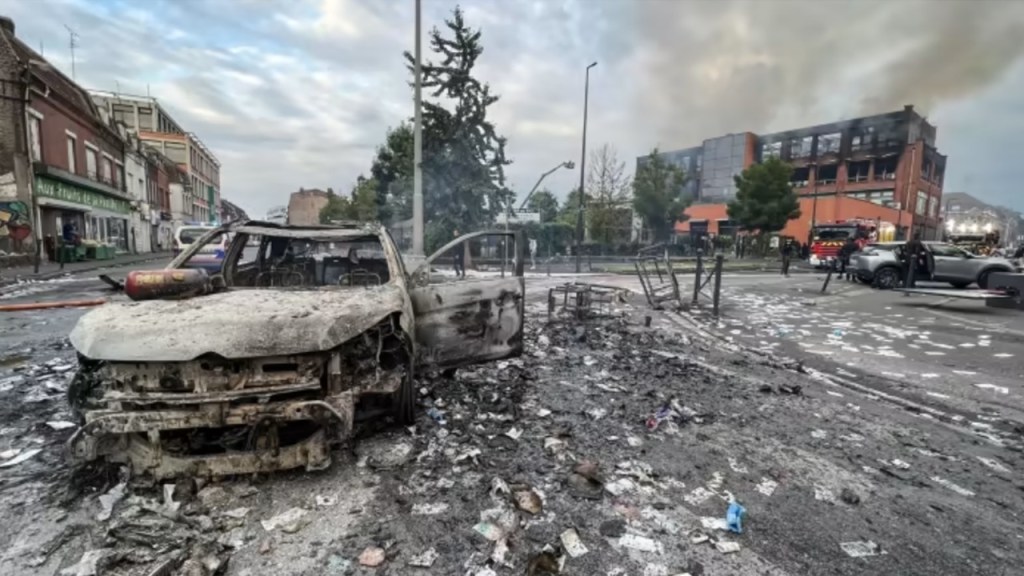
With each passing night, the protests intensified, spreading like wildfire from Paris to Marseille and Lyon. The French Ministry of the Interior reported a staggering 1,300 arrests made overnight, highlighting the magnitude of the unrest. Cars and buildings were set ablaze, stores were looted, and chaos reigned in the streets. The damage was widespread, with an estimated 2,500 fires ravaging the affected areas.
Law enforcement authorities, faced with the daunting task of restoring order, deployed approximately 45,000 police officers throughout the country. However, their efforts proved insufficient to quell the rising tide of anger and frustration that has gripped the nation. Dozens of police officers and firefighters sustained injuries during clashes with protesters, while the number of wounded demonstrators remains uncertain.
French Interior Minister Gerald Darmanin, acknowledging the gravity of the situation, addressed reporters, affirming that the deployment of police and gendarmes would be repeated on Saturday evening. In Marseille, an additional 200 riot police officers were mobilized to confront the mounting unrest. The scenes on the streets were reminiscent of a battlefield, tear gas filling the air as night descended upon the port city.
The tragic loss of Nahel has sent shockwaves throughout the nation, prompting an outpouring of grief and demands for justice. His funeral, held on Saturday in Nanterre, became a poignant gathering of mourners paying their final respects. The victim’s family, who have roots in Algeria, received support from the community and beyond as they called for accountability and an end to the cycle of violence.
In response to the escalating protests, the French government made the difficult decision to cancel large-scale events scheduled for Friday, recognizing the need to prioritize safety and minimize further unrest. President Emmanuel Macron appealed to parents, urging them to keep their children at home due to the significant presence of young people among the protesters. The impact of the demonstrations on daily life and public events has underscored the gravity of the situation and the urgency to address the underlying issues that have ignited such fury.
The officer responsible for Nahel’s death now faces detention on suspicion of voluntary homicide, pending an ongoing investigation by the local prosecutor’s office. Nanterre prosecutor Pascal Prache emphasized that the officer did not meet the necessary requirements to use his weapon and will remain in custody until the trial. Simultaneously, the Inspectorate General of the National Police, an independent body responsible for investigating allegations of police misconduct, has launched its own inquiry into the incident, aiming to shed light on the circumstances surrounding the fatal shooting.
President Macron, along with Interior Minister Darmanin, has continuously called for calm and urged the nation to await the results of the investigations. However, the voices demanding justice and systemic change have grown louder, finding resonance not only in the streets but also among public figures. France’s national football team, including star player Kylian Mbappé, released a statement calling for an end to the violence, emphasizing their shared pain and sadness over Nahel’s untimely death.
As France grapples with this period of profound unrest, the nation stands at a crossroads. The protests, fueled by anger, frustration, and a deep sense of injustice, have laid bare the social divisions that plague the country. The challenge now lies in addressing these underlying issues, healing wounds, and forging a path towards a more equitable and inclusive society, where tragedies like Nahel M.’s untimely death are not repeated.
Portions of this article were generated using artificial intelligence.

 Terre Haute Vice News
Leave a comment