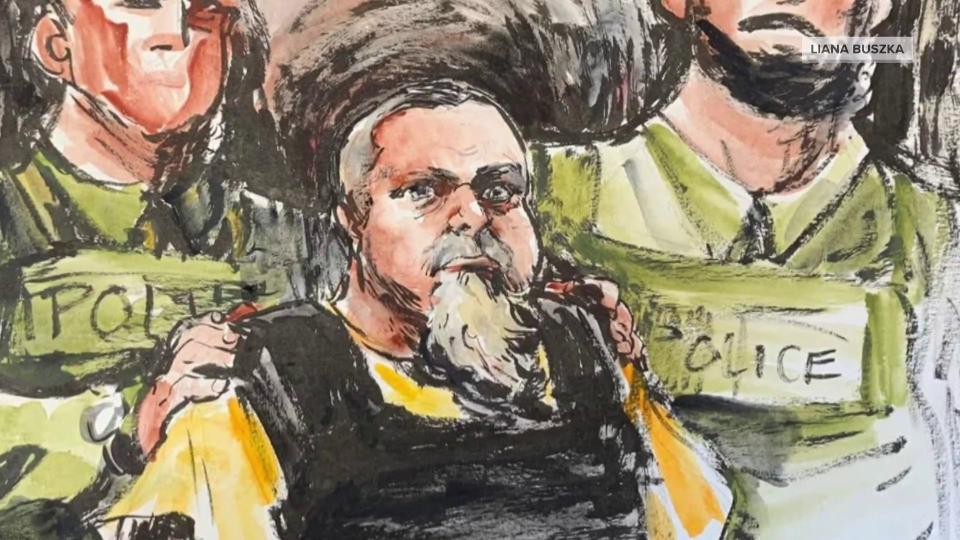
According to a report in the South Bend Tribune, Indiana State Police Sgt. Christopher Cecil offered pivotal insights into the tragic events surrounding the deaths of teenagers Abigail “Abby” Williams and Liberty “Libby” German, who went missing on February 13, 2017, while hiking near Delphi, Indiana.
Cecil’s testimony reconstructed the timeline of the girls’ final hours using digital evidence from Libby’s phone. It reveals that shortly before their disappearance, Libby called her father, took photos, and began recording a video that captured a man later identified as a primary suspect,
“Bridge Guy,” following Abby across the Monon High Bridge. This video, lasting 43 seconds, has become crucial evidence in the case against Richard Allen, who is facing multiple counts of murder in connection with the deaths.
Cecil also provided critical information about the phone’s activity after the girls went missing. At 4:06 p.m., as family members began searching for the girls, Libby’s grandmother sent a message, “You need to call me now.”
Around 4:33 a.m. the next day, Libby’s phone reconnected to a cell tower, an anomaly that remains unexplained, suggesting it may have been turned on hours after the girls’ presumed time of death.
Additional testimony was presented from eyewitness Sarah Carbaugh, who recalled seeing a man resembling “Bridge Guy” covered in mud and blood near the trail entrance on the day the girls disappeared.
Despite her initial reluctance to report the sighting, she later testified that his appearance was unsettling and that she recognized him as the same person in the circulated video footage. The defense, however, challenged the credibility of Carbaugh’s statements by highlighting inconsistencies across multiple interviews.
Dr. Roland Kohr, a forensic pathologist who performed the autopsies, disclosed disturbing details about the nature of the girls’ injuries. Abby and Libby sustained fatal neck wounds, with Libby’s injuries suggesting a struggle.
Kohr’s testimony did not find conclusive signs of sexual assault, but he cautioned that this does not necessarily rule out sexual contact.
Allen’s defense contends that evidence points elsewhere, arguing that someone else may have used Libby’s phone and moved the girls’ bodies after the time of death. As the trial progresses, testimonies continue to paint a complex picture of the investigation and the horrific events on the Monon High Bridge trail, with the case’s high-profile status generating widespread public and media attention.

 Terre Haute Vice News
Leave a comment