Dustin Milligan, May 2026
The surveillance state does not arrive all at once.
It arrives one camera at a time.
One contract at a time.
One carefully worded press release at a time.
And when citizens begin asking questions, the response is often the same:
partial disclosures, vague answers, delayed records, and carefully managed transparency.
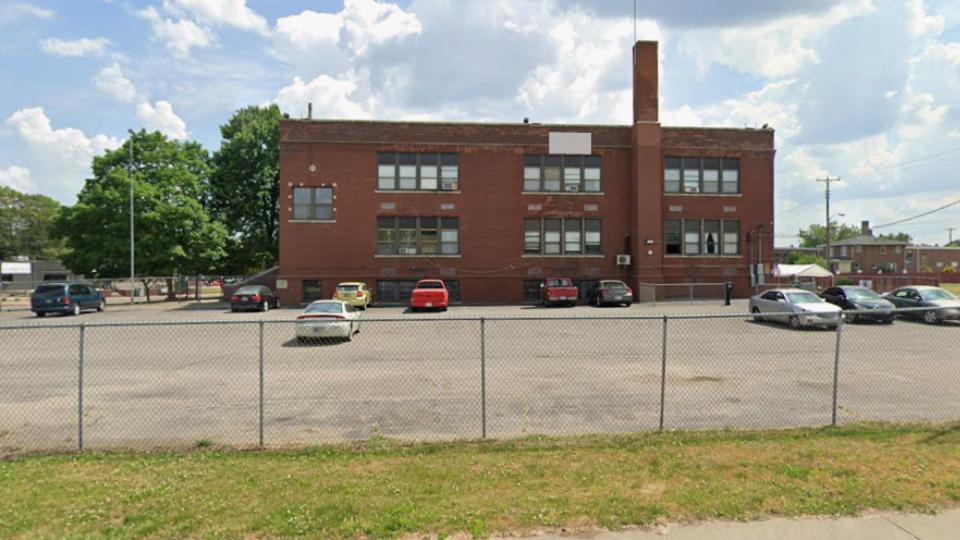
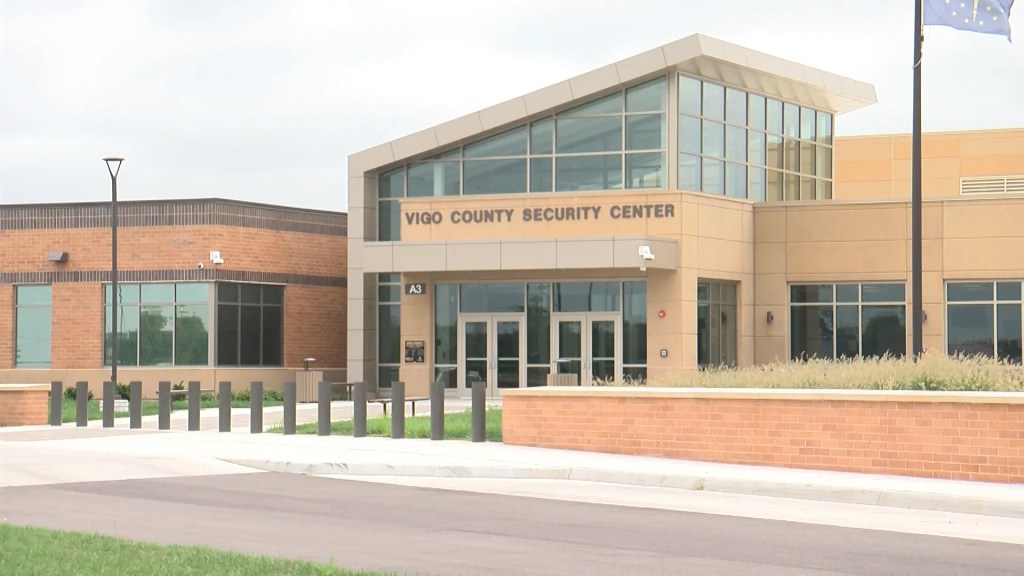
That is exactly what has unfolded in Terre Haute, Indiana.
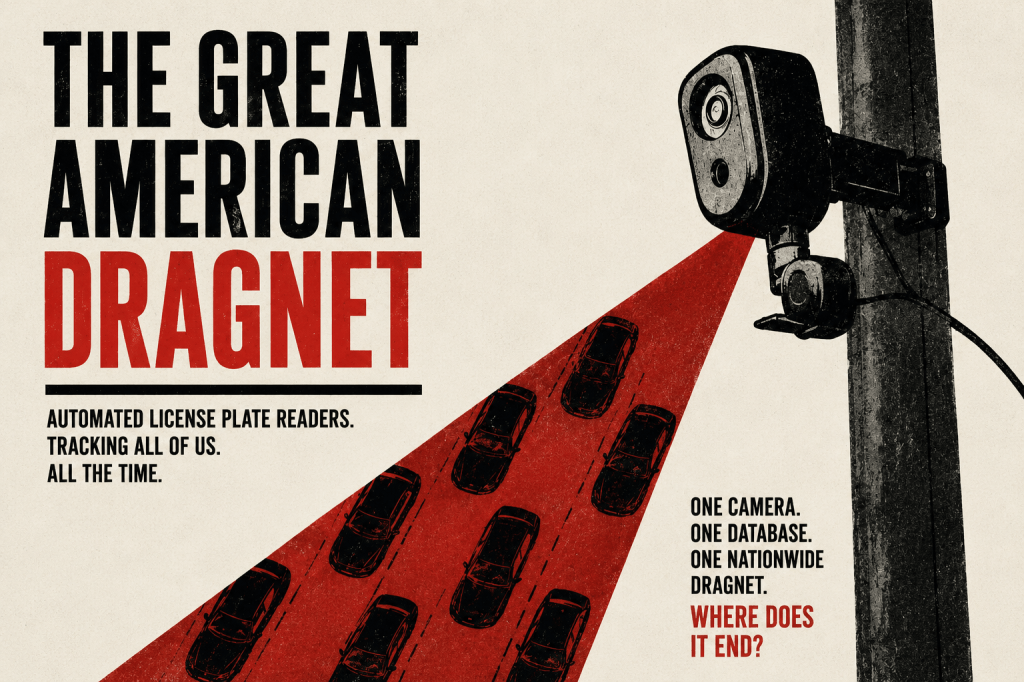
For months, Terre Haute Vice News has pursued public records regarding Terre Haute Police Department’s agreement with Flock Safety — one of the nation’s fastest-growing automated license plate reader companies.
What came back was not meaningful transparency.
It wasn’t even the bare minimum.
The documents released consisted largely of abbreviated agreements, equipment summaries, and signature pages. Missing were many of the deeper legal provisions that ordinary citizens would reasonably expect to review when a system is capable of tracking, storing, analyzing, and sharing vehicle movement data across a nationwide law enforcement network.
That missing context matters.
Because while local governments continue marketing these systems as simple crime-fighting tools, public reporting and civil liberties organizations are describing something far larger.
A recent ACLU warning to municipalities using Flock systems warned local governments about changes to Flock’s legal terms, raising concerns that revisions could “disempower customers.”
The ACLU specifically raised concerns involving:
• customer control over uploaded data
• liability limitations
• arbitration provisions
• broader company discretion regarding system governance
That alone should concern citizens.
But the issue becomes far more serious when compared against the actual records released by Terre Haute Police Department.
Because the documents provided do not appear to include the full contractual framework necessary for the public to fully understand:
• how terms may change
• how data is governed
• who ultimately controls information
• what future policy changes may occur
• what protections actually exist for ordinary citizens
That creates a major transparency problem.
Especially for a surveillance system capable of monitoring people who are not suspected of crimes.
According to documents obtained from Terre Haute’s agreement with Flock:
• the system includes nationwide network access
• law enforcement network integration
• searchable historical vehicle data
• vehicle fingerprint technology
• analytics systems
• map integration
• cross-camera searching capabilities
The documents also describe technology capable of identifying not only license plates, but additional characteristics including:
• vehicle color
• make
• model
• roof racks
• bumper stickers
• other distinguishing features
That is not merely a camera.
That is a searchable movement-tracking system.
And now federal interest appears to be expanding.
A recent investigation by 404 Media reported the FBI is seeking nationwide automated license plate reader access capable of tracking vehicle movement across the country.
That revelation fundamentally changes the debate.
For years, Americans were told these systems were localized tools designed to recover stolen vehicles or assist with investigations.
Now the architecture increasingly resembles something much larger:
a nationwide searchable movement database.
Supporters of these systems often respond with:
“Your phone already tracks you.”
That argument ignores one critical constitutional distinction.
Americans voluntarily choose whether to use:
• social media
• smartphones
• email providers
• location-sharing applications
• digital services
Users can:
• delete apps
• disable permissions
• switch providers
• reduce participation entirely
Public roads do not work that way.
Driving is not optional in modern America.
You cannot reasonably opt out of transportation infrastructure.
And unlike many major technology companies — which generally require legal process or warrants for highly sensitive user information — automated license plate reader systems passively collect data from everyone automatically, regardless of suspicion.
That distinction matters.
The United States Supreme Court has repeatedly recognized that advancing technology changes the constitutional balance between observation and surveillance. The concern is not merely whether police can observe public spaces.
Of course they can.
The concern is whether government can quietly create permanent, searchable databases documenting the movements of ordinary citizens over time.
Technology erased the natural limits that once constrained surveillance:
• manpower
• time
• cost
• human memory
One officer watching traffic is limited.
A permanent AI-assisted camera network operating continuously across cities and states is something entirely different.
And perhaps the most alarming part of this entire process is how difficult basic transparency has become.
An independent journalist should not have to fight this hard simply to determine:
• what contracts were signed
• what powers exist
• what data is collected
• who controls it
• how the system may evolve over time
Yet that is precisely where the public now finds itself.
The system is becoming increasingly automated, increasingly interconnected, and increasingly opaque — while ordinary Americans are told not to worry because “technology already tracks you anyway.”
That is not transparency.
That is normalization.
And normalization is how surveillance systems become permanent.





Leave a Reply