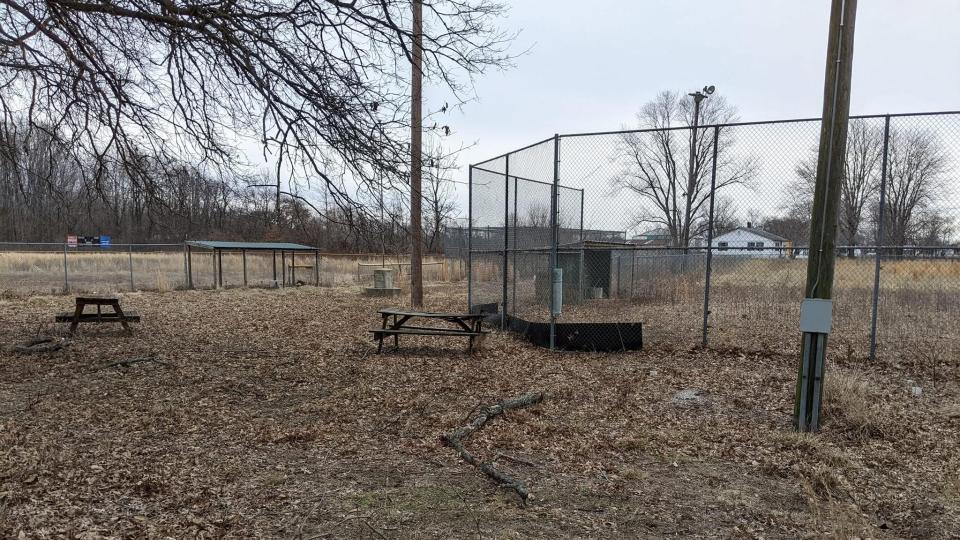
For generations, youth baseball in Indiana followed a familiar pattern. Children signed up for a local league, parents volunteered to coach, businesses sponsored teams and summer evenings were spent at neighborhood ballparks playing against kids from the same community. For many families, that version of youth baseball still exists, but increasingly, it is no longer where the most competitive players are expected to be.
Across Indiana and the country, youth baseball has gradually shifted toward a travel-team model built around tryouts, tournament schedules, specialized coaching, private instruction and trips that can take families across the state , or across several states, over the course of a season. That transition has changed more than where children play baseball. It has changed what families are expected to spend to keep their children competitive.
National research from the Aspen Institute’s Project Play initiative found that the average family spent $1,016 on a child’s primary sport in 2024, a 46 percent increase from 2019. When additional sports were included, families spent nearly $1,500 per child annually. Baseball was the most expensive of the three most popular youth sports studied — baseball, basketball and soccer — with spending on baseball increasing 68 percent in just five years.
For families involved in competitive travel programs, the bill can climb considerably higher. Registration fees are only the beginning, with uniforms, bats, gloves, tournament admission, private lessons, camps, hotel rooms, restaurant meals and gasoline potentially turning a child’s baseball season into an expense measured in thousands of dollars. For some families playing high-level club sports, annual expenses can reach $10,000 or more.
From the Local Diamond to the Travel Circuit
The financial change reflects a larger transformation in the structure of youth baseball. Traditional recreational leagues were generally designed around geography, with a child playing for a team in his town or neighborhood, competing against nearby teams and, if selected, possibly joining an all-star team after the regular season.
Travel baseball reverses much of that model. Teams recruit players across larger geographic areas and often organize around ability rather than neighborhoods. Tryouts can begin at increasingly young ages, and successful programs market themselves based on tournament results, facilities, coaching, player development and connections to high school and college baseball.
The result can create a difficult decision for parents. A child may enjoy playing recreational baseball, but parents can begin wondering whether staying in a local league will leave that player behind as teammates and competitors move into travel programs. That concern can become particularly powerful as children approach middle school and eventually compete for high school roster spots.
That creates a system in which athletic opportunity can become increasingly connected to a family’s ability to pay. The question is no longer simply whether a child has enough talent to compete, but whether the family has enough time and money to provide the opportunities increasingly associated with developing that talent.
The Carmel Question
Few places illustrate the complicated relationship between resources, opportunity and athletic success better than Carmel. Carmel High School is not simply successful by Indiana standards; its athletic program exists in a category almost entirely its own.
The dominance becomes even clearer when Carmel is compared with other historically successful Indiana athletic programs. When Carmel announced its return to the Metropolitan Interscholastic Conference in 2025, the school reported that it led the conference with 180 IHSAA team state championships, compared with 65 for North Central, 31 for Ben Davis and 29 for Warren Central.
That success cannot simply be reduced to money. Carmel has talented athletes, experienced coaches, strong traditions and generations of students who have built expectations around winning. Its enrollment — more than 5,000 students in recent years — also gives the school an unusually large pool of potential athletes from which to build its programs.
Carmel also sits in one of Indiana’s more affluent communities, however, where many families have greater access to the increasingly expensive youth sports system that develops athletes long before they reach a high school campus. That distinction matters when examining the broader transformation taking place in youth athletics.
Talent Is Free. Development Isn’t.
A player’s natural ability does not depend on his parents’ income, but access to opportunities that can develop that ability increasingly can. A family with significant financial resources can potentially provide a young athlete with travel baseball, private hitting instruction, pitching lessons, strength training, camps and year-round access to indoor facilities.
Another child may be every bit as naturally talented but have access only to a local recreational season lasting a few months. Over several years, those differences can accumulate, particularly when one athlete is receiving hundreds of additional repetitions, professional instruction and regular competition against other highly skilled players.
That does not mean wealthy communities automatically produce champions or that successful athletes must come from travel programs. Indiana’s sports history is filled with exceptional athletes and championship teams from small towns, rural communities and working-class neighborhoods, but the changing economics of youth sports increasingly influence who receives the most opportunities to develop.
Baseball showed an especially pronounced divide in one regional Project Play study, where high-income children were twice as likely as low-income children to regularly play the sport. Those numbers raise questions about whether a game traditionally associated with public parks and community ballfields is gradually becoming less accessible to children whose families cannot afford the expanding costs.
What Happens to the Local League?
Perhaps the biggest long-term question is not what travel baseball provides, but what happens to the children who cannot afford it. Community leagues historically served as the front door to baseball, requiring fields, volunteers and equipment but generally allowing large numbers of children with different skill levels to play together at relatively modest cost.
When stronger players leave those leagues for travel programs, recreational leagues can lose not only talented athletes but also engaged families, volunteer coaches and financial support. That loss can make it increasingly difficult for community leagues to offer the level of competition and instruction families are seeking.
The process can create a cycle in which recreational leagues weaken as families seeking stronger competition move toward travel programs. Their departure can further weaken the recreational league, making travel baseball appear even more necessary for serious players and encouraging another group of families to make the same transition.
Eventually, what began as an optional higher level of competition risks becoming the unofficial price of admission for children hoping to compete at higher levels. Families who cannot afford that price may face the possibility that their children will receive fewer opportunities to develop, regardless of their natural ability.
More Than Baseball
The same forces are reshaping soccer, basketball, volleyball, softball, swimming and other youth sports throughout Indiana. Club teams, private coaching and specialized training can provide tremendous opportunities, allowing children to compete against strong opponents, receive quality instruction, build friendships and travel to places they otherwise might never see.
The concern is not that those opportunities exist, but what happens when families begin believing they are required. Youth sports once promised something remarkably simple: find a field, form a team and give children a chance to play. Increasingly, American youth sports operate as a marketplace, with families purchasing additional training, additional games and additional exposure in hopes of giving their children an advantage.
Indiana’s athletic landscape demonstrates what highly developed sports systems can produce, and Carmel’s unprecedented championship total is evidence of an extraordinary culture of athletic achievement. Carmel’s success should not be dismissed as simply the product of wealth, but its dominance provides an opportunity to examine how population, community resources, private training, youth programs and family finances can combine to create advantages that begin years before an athlete puts on a high school uniform.
As youth sports become more specialized and expensive, the larger question for Indiana is whether competitive athletics will remain accessible to children regardless of where they live or how much their parents earn. There will always be children who can throw harder, run faster or hit farther than their peers, but increasingly, before Indiana’s young athletes ever compete for a high school uniform, families are being asked to pay for the opportunity to discover just how good their children can become.



Leave a Reply